

What Tasks Can't Fully Automated Property Management Software Handle Without Human Oversight?
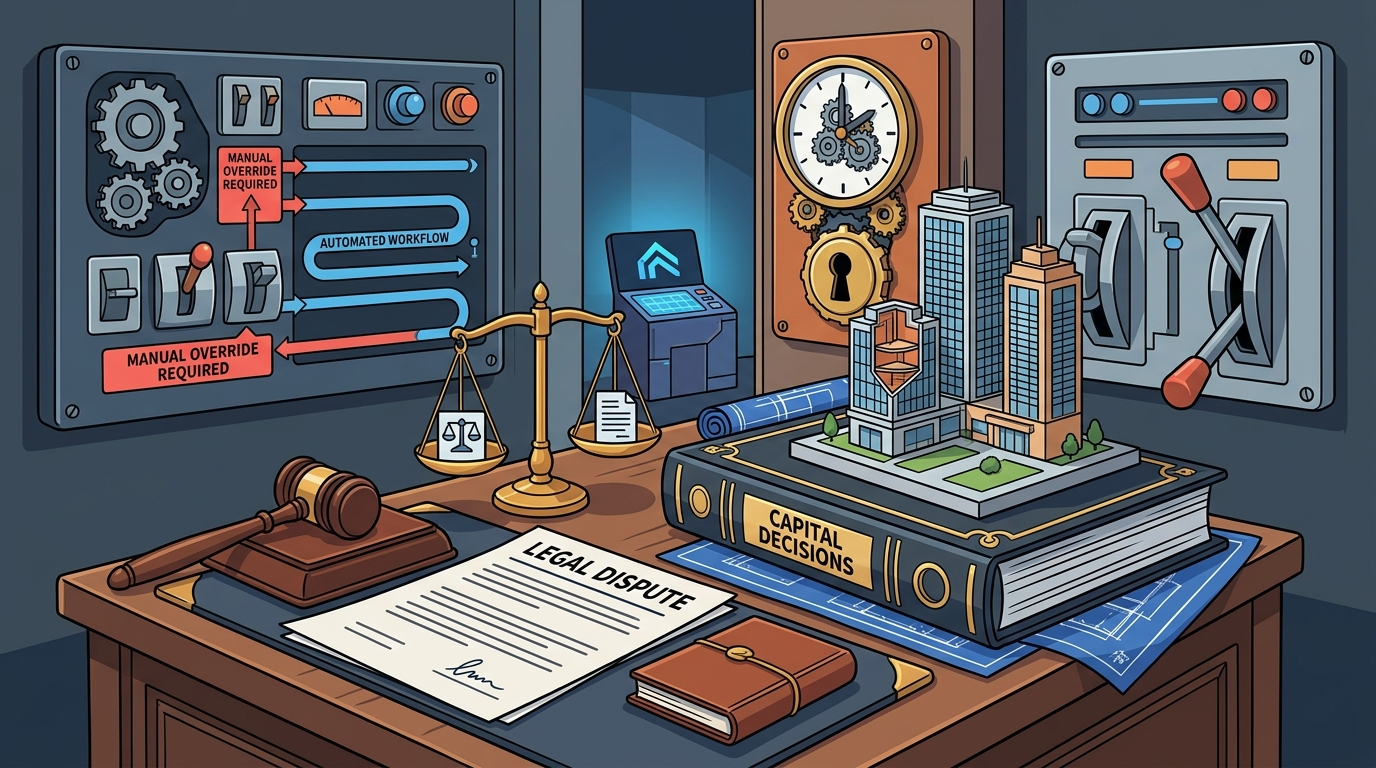
Fully automated property management software cannot handle complex legal disputes, nuanced tenant negotiations, or high-stakes capital decisions without human oversight. While AI systems like Mondo automate routine operations, institutional owners must retain human control for strategic governance, regulatory interpretation, and exception handling. This hybrid model ensures operational efficiency while maintaining the accountability required for institutional real estate portfolios.
The Boundary Between Automation and Governance
Workflow automation in real estate is the process of using software to execute repetitive operational tasks without manual intervention. However, automation has strict boundaries. Tasks that require subjective judgment, legal interpretation, or strategic foresight cannot be fully delegated to algorithms. For example, while an AI system can flag a lease violation, it cannot determine the appropriate legal remedy or negotiate a settlement with a tenant. The distinction between routine execution and strategic decision-making is the core limitation of current property management software.
Legal and Regulatory Interpretation
Regulatory compliance in real estate involves interpreting complex, often contradictory, local, state, and federal laws. Automated systems can track compliance deadlines and generate reports, but they cannot interpret ambiguous legal language. A specific example is the interpretation of fair housing laws during tenant screening. While software can apply standardized criteria, it cannot navigate the nuanced legal defenses required when a tenant claims discrimination. Human oversight is essential to review automated decisions and ensure they align with current legal precedents and institutional risk tolerance.
Complex Tenant Negotiations and Disputes
Tenant relations often involve emotional and financial complexities that exceed algorithmic capabilities. Automated systems can handle routine inquiries and maintenance requests, but they struggle with lease renegotiations, eviction proceedings, and dispute resolution. For instance, when a commercial tenant requests a rent abatement due to a minor service interruption, an AI system might apply a standard policy. However, a human asset manager must evaluate the long-term relationship value and the specific context of the dispute to decide whether to grant the abatement. This requires empathy and strategic thinking, which are currently beyond the scope of fully automated workflows.
Capital Allocation and Strategic Decisions
Capital allocation is the process of deciding how to invest funds for property improvements, acquisitions, or debt repayment. This is a strategic function that requires human oversight. While software can model financial scenarios and provide data-driven recommendations, it cannot make the final investment decision. For example, deciding whether to renovate an aging building or sell it requires considering market trends, investor sentiment, and long-term portfolio strategy. These decisions involve risk assessment and strategic vision that cannot be fully automated. Human leaders must review AI-generated insights and make the final call based on institutional goals.
Exception Handling and Crisis Management
Key Takeaways
- Workflow automation handles routine tasks but cannot replace human judgment for strategic decisions.
- Legal and regulatory interpretation requires human review to ensure compliance and manage risk.
- Complex tenant negotiations and disputes need human empathy and strategic thinking.
- Capital allocation and investment decisions must be made by human leaders based on AI insights.
- Exception handling and crisis management require human flexibility and rapid decision-making.
- Institutional owners should use AI for execution and humans for governance and strategy.
Frequently Asked Questions
Can AI software make legal decisions for property owners?
No, AI software cannot make legal decisions. It can flag potential legal issues and generate reports, but human legal counsel and asset managers must interpret laws and make final decisions.
What is the role of human oversight in automated property management?
Human oversight ensures that automated actions align with institutional goals, legal requirements, and strategic plans. It provides accountability and handles exceptions that software cannot manage.
How does automation handle tenant disputes?
Automation can track dispute details and apply standard policies, but human managers must negotiate resolutions and make final decisions on complex or high-stakes disputes.
Can software decide on capital investments?
Software can model financial scenarios and provide recommendations, but human leaders must make the final investment decisions based on strategic goals and risk tolerance.
What are the limitations of AI in crisis management?
AI lacks the flexibility to handle unprecedented events like natural disasters. Human oversight is required to coordinate emergency responses and make rapid, context-aware decisions.
How does REIT AI support human oversight?
REIT AI provides tools for monitoring automated actions and reviewing exceptions, allowing human managers to maintain control while benefiting from operational efficiency.
Conclusion
Fully automated property management software is a powerful tool for operational efficiency, but it is not a replacement for human judgment. Tasks requiring legal interpretation, strategic decision-making, and crisis management must remain under human oversight. By combining the speed of automation with the wisdom of human governance, institutional owners can achieve both efficiency and accountability. Contact REIT AI to learn how our platform supports this hybrid model for your portfolio.