

AI is transforming CAM reconciliation by shifting the process from a manual, month-end audit to a continuous, real-time verification system. Instead of relying on spreadsheets and delayed invoices, intelligent systems now parse lease terms and vendor bills instantly. This shift allows commercial landlords and tenants to identify variances and recoveries as they occur, rather than months later. By automating the heavy lifting of data extraction and comparison, AI reduces the administrative burden on property teams and improves the accuracy of financial reporting for both parties.
The Structural Bottleneck in Traditional Reconciliation
Traditional CAM reconciliation is a labor-intensive process that often lags behind actual property operations. Most commercial property management teams rely on manual data entry and periodic batch processing to compare lease agreements with vendor invoices. This delay creates a significant blind spot where cost overruns or under-recoveries remain hidden until the final annual statement is prepared. The result is a reactive workflow that consumes valuable staff time and often leads to disputes between landlords and tenants.
The core issue is that legacy systems treat reconciliation as a back-office accounting task rather than an operational control. When data is siloed in different software platforms, the effort to align lease variables with actual spend becomes a manual chore. This friction not only increases operating costs but also erodes trust in the transparency of the financial relationship. For institutional investors, this lack of real-time visibility makes it difficult to monitor portfolio performance accurately.
How AI Automates the Reconciliation Workflow
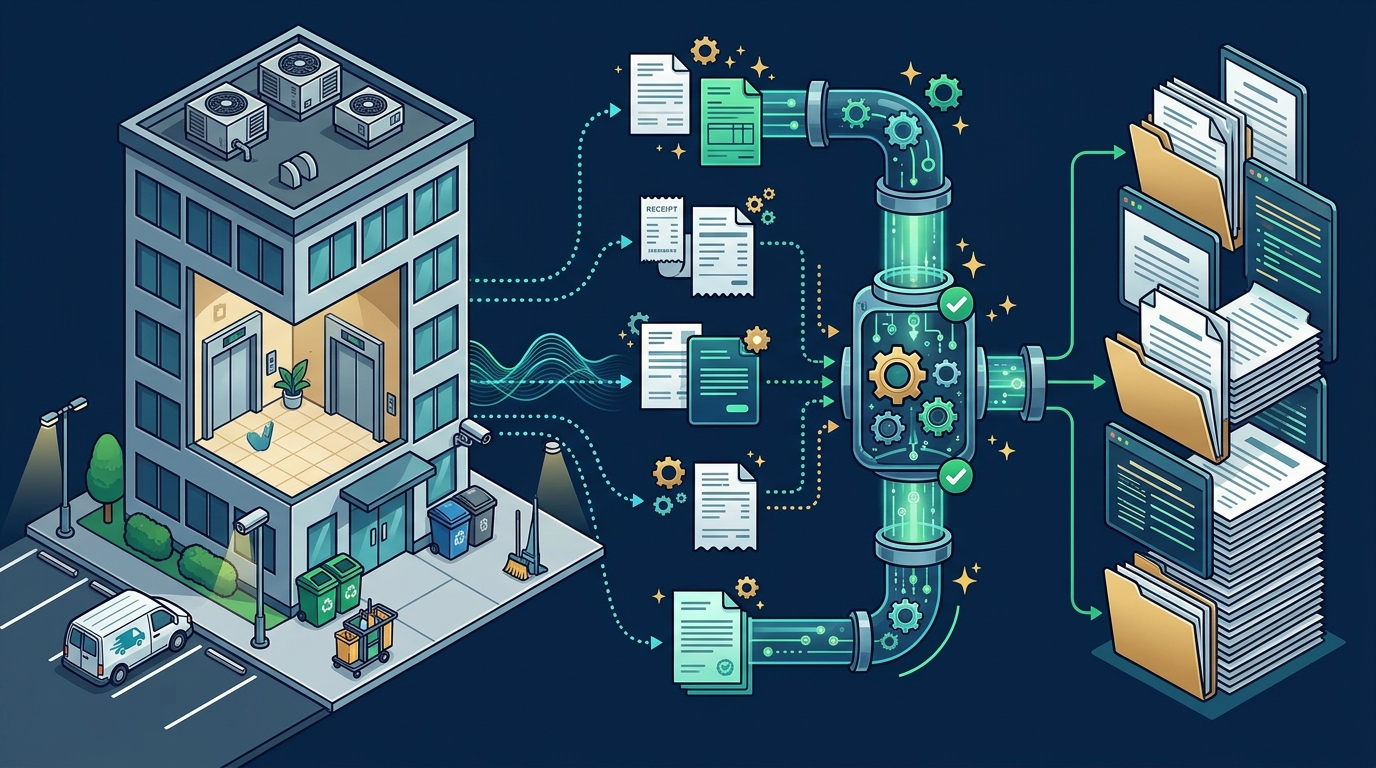
Artificial intelligence addresses these inefficiencies by automating the extraction and comparison of data. AI-driven platforms can ingest lease documents and vendor invoices, extracting key variables such as base rent, CAM charges, and recovery thresholds automatically. This technology eliminates the need for manual data entry, which is a primary source of human error in traditional workflows. By standardizing the data format, AI ensures that every invoice is checked against the specific terms of the lease it supports.
At REIT AI, our platform is designed to handle this complexity by running the operation end-to-end. The system reviews every vendor invoice against contract terms and historical pricing before approval. This continuous reconciliation means that variances are flagged in hours, not at month-end. The implication for landlords is a significant reduction in the time spent on administrative tasks, allowing teams to focus on strategic asset management rather than data cleanup.
Real-Time Visibility for Landlords and Investors
For commercial landlords, the primary benefit of AI-driven reconciliation is the shift from periodic reporting to live monitoring. Traditional models provide a snapshot of financial health once a month or once a year, which is often too late to correct course. AI systems provide a constant report of the entire operation, flagging anomalies the moment they happen. This live view of budget-to-actual variance allows asset managers to make informed decisions about vendor contracts and maintenance spending in real time.
This level of transparency is particularly valuable for institutional investors who require board-ready reporting. Instead of waiting for a compiled cycle that is stale on arrival, investors can see continuous NOI and OpEx reporting. The ability to identify cost drivers per asset helps in optimizing the portfolio's financial performance. For example, if a specific vendor is consistently billing above the historical average, the system can flag this for review before the invoice is paid, preventing unnecessary spend.
Tenant Transparency and Dispute Reduction
Furthermore, AI systems can generate detailed explanations for each charge, making it easier for tenants to understand the basis of their bills. This transparency builds trust in the landlord-tenant relationship and can lead to higher tenant retention rates. By providing a clear audit trail of every automated and approved action, landlords can demonstrate their commitment to fair and accurate billing. This is a significant advantage in a competitive leasing market where transparency is increasingly valued by tenants.
Implementation Considerations for Commercial Properties
Implementing AI for CAM reconciliation requires careful planning and integration with existing systems. The technology must be able to connect with the property's accounting, banking, and CRM systems to function effectively. This integration ensures that data flows seamlessly between platforms, reducing the need for manual intervention. However, it is important to note that AI systems are decision-support tools, not licensed financial advisors. They assist in managing operations but do not replace professional judgment in complex financial matters.
When selecting an AI platform, commercial property owners should look for solutions that offer full visibility and governance controls. The system should allow asset managers to set rules, thresholds, and approval gates, ensuring that every automated action is within policy. This governance model is crucial for maintaining control over the operation while benefiting from the efficiency of automation. REIT AI's approach emphasizes that the Asset Manager stays fully in charge, seeing everything and approving every move, which is a key consideration for institutional clients.
Key Takeaways
- AI shifts CAM reconciliation from a manual, month-end audit to a continuous, real-time verification process.
- Automated data extraction reduces human error and the administrative burden on property management teams.
- Real-time visibility allows landlords to identify cost variances and make informed decisions before invoices are paid.
- Increased transparency for tenants reduces billing disputes and builds trust in the landlord-tenant relationship.
- AI systems provide a complete audit trail of every automated action, supporting compliance and regulatory reporting.
- Implementation requires integration with existing accounting and CRM systems to ensure seamless data flow.
- Asset managers retain full control through defined rules, thresholds, and approval gates in AI-driven platforms.
Frequently Asked Questions
What is CAM reconciliation in commercial real estate?
CAM reconciliation is the process of comparing the Common Area Maintenance charges billed to tenants against the actual costs incurred by the landlord. This ensures that tenants are charged fairly and accurately for shared property expenses, such as maintenance, utilities, and insurance.
How does AI improve the accuracy of CAM reconciliation?
AI improves accuracy by automating the extraction of data from lease documents and vendor invoices. This eliminates manual data entry errors and ensures that every charge is checked against the specific terms of the lease, reducing the likelihood of discrepancies.
Can AI replace property management staff entirely?
No, AI does not replace property management staff entirely. Instead, it automates routine tasks such as data entry and invoice review, allowing staff to focus on strategic activities like tenant relations and asset management. The Asset Manager remains in charge of setting rules and approving actions.
What are the benefits of real-time CAM reconciliation?
Real-time reconciliation allows landlords to identify cost variances and anomalies as they occur, rather than at month-end. This enables timely corrective actions, improves cash flow management, and provides investors with up-to-date financial reporting.
How does AI handle lease abstraction for CAM charges?
AI systems use natural language processing to extract key lease variables, such as CAM recovery thresholds and base rent, from lease documents. This automated abstraction ensures that the data used for reconciliation is accurate and consistent across the portfolio.
Is AI-driven CAM reconciliation suitable for all property types?
AI-driven reconciliation is suitable for a wide range of commercial property types, including office, retail, and industrial. The key is that the system can integrate with the property's existing software stack and handle the specific lease structures and billing models used in that sector.
What role does the Asset Manager play in an AI-driven system?
The Asset Manager plays a critical role in setting the rules, thresholds, and approval gates for the AI system. They retain full oversight of the operation, reviewing recommendations and approving actions that exceed defined limits. This ensures that the AI operates within the desired governance framework.
Conclusion
AI is fundamentally changing CAM reconciliation by introducing speed, accuracy, and transparency to a process that has long been plagued by manual inefficiencies. For commercial landlords and tenants, this shift offers the opportunity to reduce costs, improve financial visibility, and build stronger relationships based on trust. As the technology continues to evolve, it will become an essential tool for institutional real estate operators seeking to optimize their portfolios. REIT AI is at the forefront of this transformation, providing the AI operating layer that allows asset managers to run their properties on autopilot while maintaining full control. To see how this technology can work for your portfolio, request a demo and explore the capabilities of the platform.