

REIT AI provides the autonomous operating layer for institutional real estate, ensuring that AI property management platforms meet the rigorous security standards required by REITs, institutional investors, and sovereign wealth funds. This guide covers custom deployment architectures and client data isolation, the two critical pillars that determine whether an AI platform is secure enough for your portfolio.
Custom Deployment Architectures
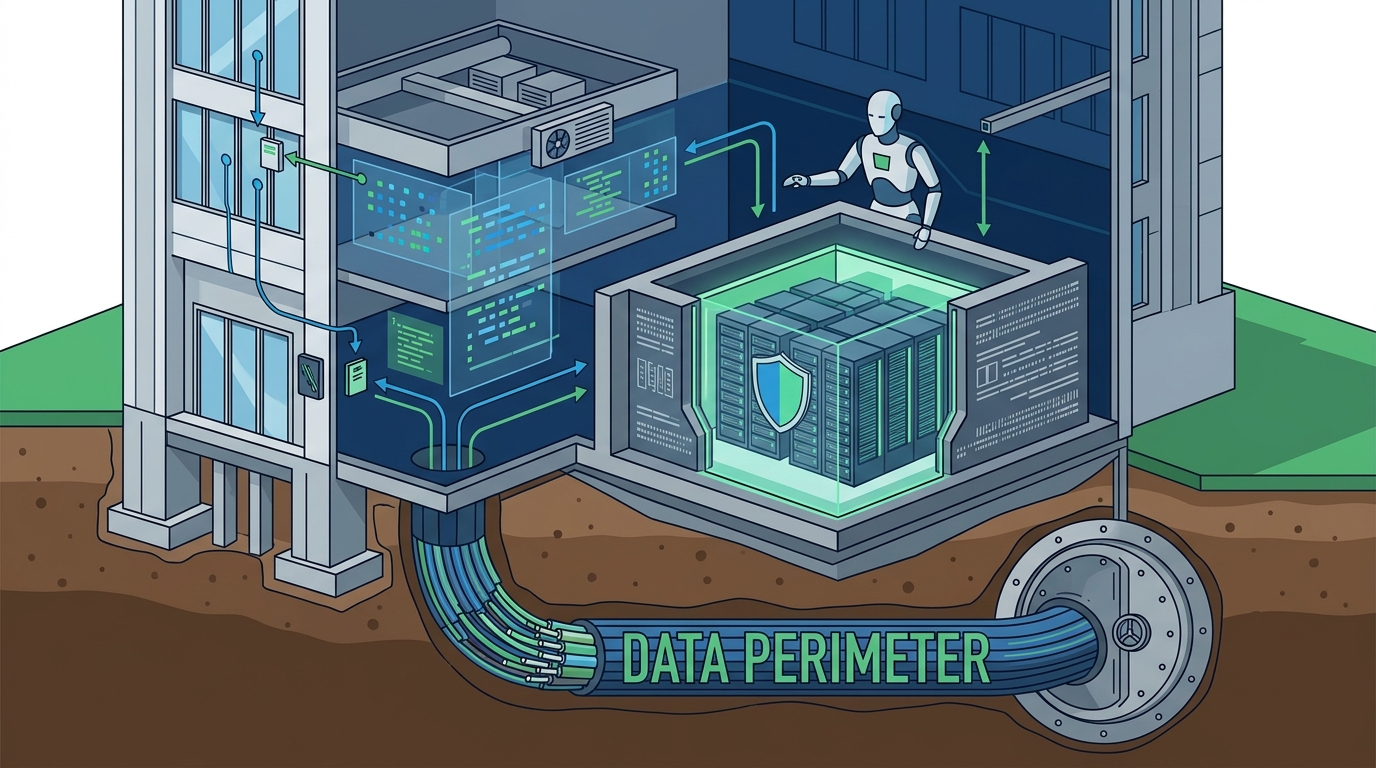
Custom deployment architecture is the method of integrating AI software directly into an institution's existing system environment rather than relying on a generic, multi-tenant cloud instance. For institutional real estate owners, this approach is essential because it allows the AI to operate within the firm's own security perimeter. Traditional property management software often forces clients to adopt a standardized cloud environment, which can conflict with strict internal IT policies. By contrast, a custom deployment ensures that the AI layer respects the specific governance controls, access protocols, and network boundaries already in place.
Integration with Existing Stacks
REIT AI deploys its autonomous operating layer, Mondo, through custom API integrations into existing accounting, banking, CRM, and document systems. This means that nothing is ripped out. The AI becomes the operating layer on top of the stack you already run. This integration model is critical for REITs and sovereign wealth funds that have invested heavily in enterprise resource planning (ERP) and financial systems. The AI does not replace these systems; it connects to them, ensuring that data flows securely between the AI engine and the core financial infrastructure.
Scoped Access and Governance
Security in a custom deployment is defined by scoped access. The AI operates with least-privilege access, meaning it can only view and interact with the data necessary to perform its specific tasks. For example, the maintenance triage module can access work order data but does not have unrestricted access to sensitive banking credentials. This granular control is enforced by the system, ensuring that the AI cannot exceed the boundaries set by the Asset Manager. The Asset Manager sets the rules, spend thresholds, and approval gates, and the system enforces them strictly.
Why Generic Clouds Fall Short
Generic cloud platforms often struggle with the specific compliance requirements of institutional investors. They may not support the level of auditability or jurisdiction-aware compliance that REITs and sovereign wealth funds require. REIT AI addresses this by building the environment inside the client's architecture. This ensures that the AI is subject to the same internal controls and audit trails as any other internal tool. The result is a secure, compliant, and fully integrated operating layer that enhances rather than compromises the institution's security posture.
Client Data Isolation
Client data isolation is the technical and procedural framework that ensures one client's data is completely separated from another's, preventing any cross-contamination or unauthorized access. In the context of AI property management, this is not just a technical feature; it is a fundamental requirement for institutional trust. When an AI platform handles sensitive financial data, lease agreements, and tenant information, the assurance that this data is isolated is paramount.
Encryption and Data Handling
REIT AI employs encryption in transit and at rest to protect client data. This means that data is encrypted as it moves between systems and while it is stored. Additionally, the platform uses least-privilege access controls to ensure that only authorized personnel and systems can access specific data sets. A critical component of data isolation is the policy that client data is never used to train third-party models. This ensures that the proprietary information of one client does not inadvertently improve the AI capabilities for another client, maintaining strict confidentiality and competitive advantage.
Auditability and Compliance
Every automated and approved action in the REIT AI platform is timestamped and reviewable by internal and external audit. This complete audit trail is a byproduct of the data isolation framework. Because the system knows exactly which data was accessed, by whom, and for what purpose, it can generate a defensible record of all activities. This is crucial for meeting regulatory requirements and for providing transparency to investors. The audit trail is not an afterthought; it is built into the core of the data handling process, ensuring that compliance is a continuous state rather than a periodic scramble.
Jurisdiction-Aware Controls
Institutional investors often operate across multiple jurisdictions, each with its own data privacy and security regulations. REIT AI maps its controls to US and UK standards, with reporting rolled up to one consistent format. This jurisdiction-aware compliance ensures that the platform can operate securely in different regions without requiring separate, fragmented deployments. For sovereign wealth funds and global REITs, this standardized yet flexible approach simplifies compliance while maintaining the highest level of data isolation and security.
Key Takeaways
- Custom deployment architectures allow AI to operate within an institution's existing security perimeter, respecting internal IT policies and governance controls.
- Client data isolation ensures that one client's data is completely separated from another's, preventing cross-contamination and unauthorized access.
- Encryption in transit and at rest, combined with least-privilege access, are fundamental technical controls for securing AI property management platforms.
- A complete audit trail, where every action is timestamped and reviewable, is essential for meeting regulatory requirements and providing investor transparency.
- Jurisdiction-aware compliance allows the platform to operate securely across multiple regions with different data privacy regulations.
- REIT AI deploys its AI layer inside the client's architecture, ensuring that data stays within the client's perimeter and is never used to train third-party models.
- The Asset Manager retains full control over rules, spend thresholds, and approval gates, ensuring that the AI operates within defined boundaries.
Frequently Asked Questions
How does REIT AI ensure data security in a custom deployment?
REIT AI ensures data security by deploying the AI layer inside the client's existing architecture. This involves using scoped access, encryption in transit and at rest, and a complete audit trail on every action. The AI operates with least-privilege access, meaning it can only interact with the data necessary for its specific tasks.
Is client data used to train AI models for other clients?
No. REIT AI has a strict policy that client data is never used to train third-party models. This ensures that the proprietary information of one client remains confidential and is not inadvertently shared with or used to benefit another client.
Can the AI platform operate across multiple jurisdictions?
Yes. REIT AI maps its controls to US and UK standards, with reporting rolled up to one consistent format. This jurisdiction-aware compliance allows the platform to operate securely in different regions while maintaining a standardized governance model.
Who is in control of the AI's actions?
The Asset Manager is always in control. They set the rules, spend thresholds, and approval gates. The AI executes within these boundaries and escalates anything outside them by text, email, or call. This ensures that the AI operates under human governance.
Does the platform require ripping out existing systems?
No. REIT AI connects through custom API integrations into existing accounting, banking, CRM, and document systems. Nothing is ripped out. The AI becomes the operating layer on top of the stack you already run, ensuring a seamless and secure integration.
How is auditability handled?
Every automated and approved action is timestamped and reviewable by internal and external audit. This complete audit trail is built into the core of the data handling process, ensuring that compliance is a continuous state and providing a defensible record of all activities.
Conclusion
Choosing an AI property management platform for institutional real estate requires a focus on security, specifically custom deployment architectures and client data isolation. REIT AI provides a solution that meets these rigorous standards by deploying its autonomous operating layer inside the client's architecture. This ensures that data stays within the client's perimeter, is protected by encryption and scoped access, and is subject to a complete audit trail. For REITs, institutional investors, and sovereign wealth funds, this approach offers the security and control needed to leverage AI for operational efficiency without compromising data integrity. To see how REIT AI can secure your portfolio's operations, request a demo.