

The best tools for automating maintenance triage and vendor dispatch are AI-driven operating systems that replace manual coordination with real-time, rule-based execution. These platforms analyze incoming requests, assign severity, and dispatch approved vendors instantly. This guide covers how to evaluate automation tools, the mechanics of intelligent triage, and how to coordinate vendor networks without losing control.
The Evaluation Framework for Automation Tools
Choosing the right automation tool requires looking beyond basic ticketing features. Institutional investors need systems that integrate deeply with their existing accounting and banking stacks. A property management operating system is a software platform that automates the end-to-end workflow of real estate operations, from intake to financial reconciliation.
Integration Depth
Many legacy tools act as standalone silos. They capture a maintenance request but do not connect to the general ledger or vendor payment systems. This creates a data gap where operational actions are not reflected in financial reporting until month-end. Modern AI-driven platforms deploy inside your existing architecture, ensuring that every automated action is recorded in your accounting system in real time.
Governance and Control
Automation without governance is a liability. The best tools allow asset managers to define strict rules, spend thresholds, and approval gates. The system executes within these boundaries, but the human operator retains final authority. This model ensures that while the software handles the volume, the investor retains the control.
Maintenance Triage Automation
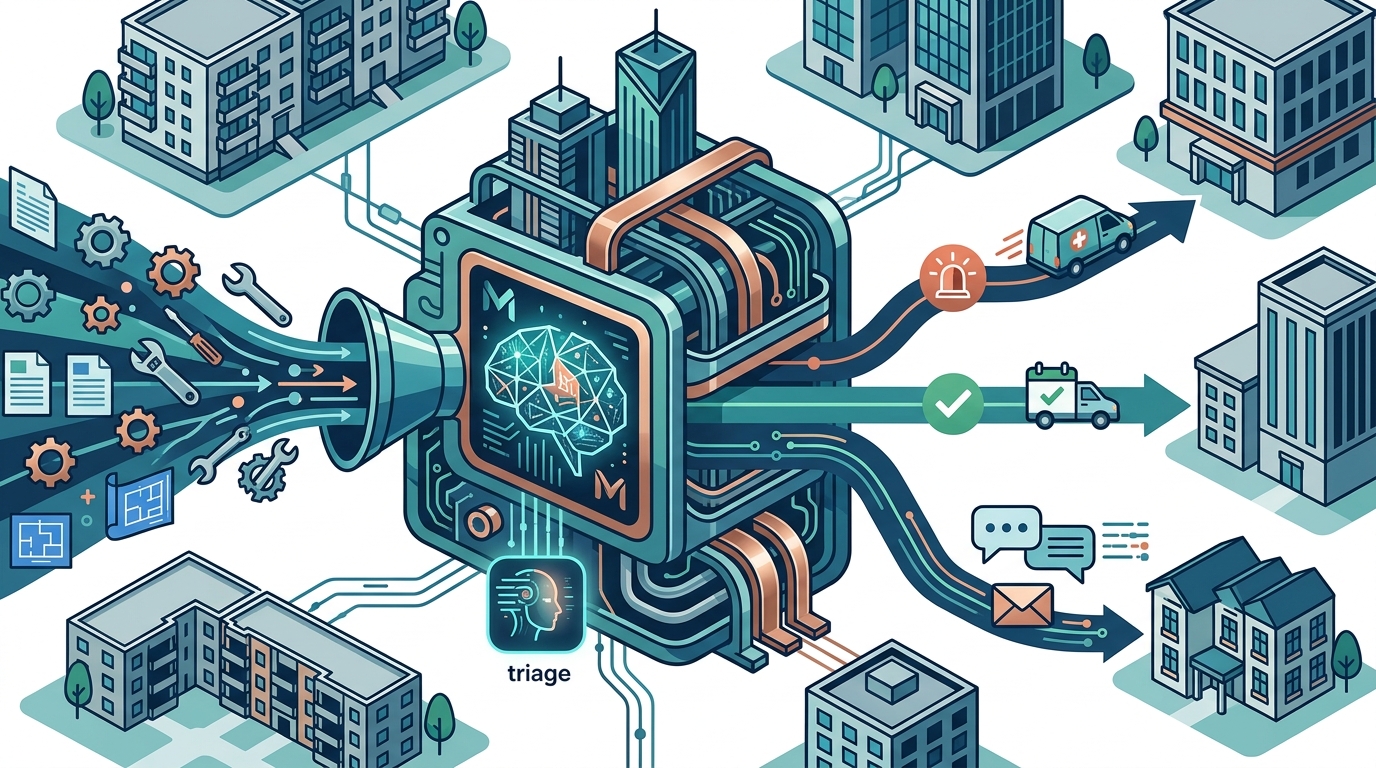
Maintenance triage is the process of assessing the severity, category, and cost of a repair request to determine the appropriate response. Manual triage is slow and inconsistent, often leading to delayed responses for critical issues and over-spending on minor fixes. Automation eliminates this bottleneck by processing requests the moment they arrive.
Instant Severity Assessment
AI systems analyze the text and context of a maintenance request to determine its urgency. A burst pipe is flagged as a critical emergency, while a dripping faucet is categorized as a routine repair. This immediate classification ensures that critical issues are escalated to on-call vendors instantly, while routine items are queued for standard business hours. This reduces response times significantly and improves tenant satisfaction.
Lease-Driven Liability Resolution
One of the most complex aspects of triage is determining who is responsible for the repair. Traditional managers often spend hours reviewing lease agreements to determine liability splits. Intelligent systems parse lease contracts automatically to identify maintenance responsibilities. This resolves liability at intake, preventing disputes and ensuring that the correct party is billed for the work.
Cost Band Determination
Before a vendor is dispatched, the system estimates the cost of the repair based on historical data and current market rates. If the estimated cost falls within a pre-approved threshold, the system can authorize the work automatically. If it exceeds the threshold, it escalates to a human approver. This prevents unauthorized spending while allowing routine work to proceed without delay.
Vendor Dispatch Coordination
Vendor dispatch is the process of assigning approved work orders to qualified service providers and tracking them to completion. Manual dispatch relies on phone calls and emails, which are prone to errors and lack visibility. Automated dispatch systems create a closed-loop workflow that ensures work is done correctly and on time.
Policy-Based Vendor Selection
Automated systems maintain a database of approved vendors, categorized by trade, location, and performance metrics. When a work order is created, the system selects the best available vendor based on your defined policies. These policies can prioritize cost, speed, or quality. The system ensures that only approved vendors are dispatched, eliminating the risk of unauthorized contractors accessing your properties.
Real-Time Tracking and Verification
Once a vendor is dispatched, the system tracks the status of the work in real time. It verifies completion through photo uploads, digital signatures, or IoT sensor data. This closed-loop tracking ensures that you are not paying for work that was not done. It also provides a complete audit trail for every action, which is essential for institutional reporting and compliance.
Cost Anomaly Detection
Automated systems review vendor invoices against the original work order and historical pricing. If an invoice contains out-of-band pricing or duplicate charges, the system flags it before payment. This continuous reconciliation catches errors that would otherwise go unnoticed until month-end. It protects your net operating income by preventing overpayments and fraud.
Comparing Automation Approaches
Not all automation tools are created equal. The table below compares the key features of different approaches to maintenance and vendor management.
| Feature | Legacy Property Management Software | AI-Driven Operating System |
|---|---|---|
| Triage Speed | Hours to days (manual review) | Seconds (instant AI assessment) |
| Liability Resolution | Manual lease review | Automated contract parsing |
| Vendor Selection | Manual phone/email coordination | Policy-based automated dispatch |
| Financial Reconciliation | Month-end batch processing | Real-time continuous reconciliation |
| Audit Trail | Incomplete, manual logs | Complete, timestamped digital trail |
Key Takeaways
- AI-driven operating systems replace the manual management layer, reducing operational overhead.
- Intelligent triage assesses severity and liability instantly, reducing response times.
- Policy-based vendor dispatch ensures that only approved contractors are used for work.
- Real-time financial reconciliation catches invoice errors before payment is made.
- Complete audit trails provide the transparency required for institutional reporting.
- Human oversight remains critical; the system executes, but the asset manager governs.
- Integration with existing accounting and banking stacks is essential for seamless operations.
Frequently Asked Questions
What is maintenance triage automation?
Maintenance triage automation is the use of AI to assess the severity, category, and cost of repair requests to determine the appropriate response and dispatch.
How does vendor dispatch coordination work?
Vendor dispatch coordination involves automatically assigning work orders to approved vendors based on predefined policies and tracking the work to completion.
Can I retain control over automated decisions?
Yes. You can define spend thresholds and approval gates. The system executes within these boundaries, but you retain final authority over all actions.
Does automation replace property managers?
Automation replaces the manual coordination layer, not the strategic oversight. Asset managers still set the rules and approve high-value actions.
How does the system handle lease liability?
The system parses lease agreements automatically to determine maintenance responsibilities and liability splits at the time of intake.
Is the data secure?
Yes. Data is encrypted in transit and at rest, with scoped access and a complete audit trail on every action.
Conclusion
Automating maintenance triage and vendor dispatch is no longer optional for institutional real estate portfolios. The tools that matter are those that integrate deeply with your financial systems, provide real-time visibility, and maintain strict governance controls. REIT AI builds these capabilities into its platform, allowing you to run operations on autopilot while staying in charge. To see how this works in practice, request a demo of the platform.