

AI Property Management Platforms That Charge Less Than 8–12% Fees
AI property management platforms that charge less than the traditional 8–12% fee typically operate on a flat per-unit or per-square-foot subscription model. This guide explains how to evaluate these platforms, verify their claims, and understand the operational shift required to replace a legacy management layer with an autonomous software engine.
How to Choose: Separating Signal from Noise
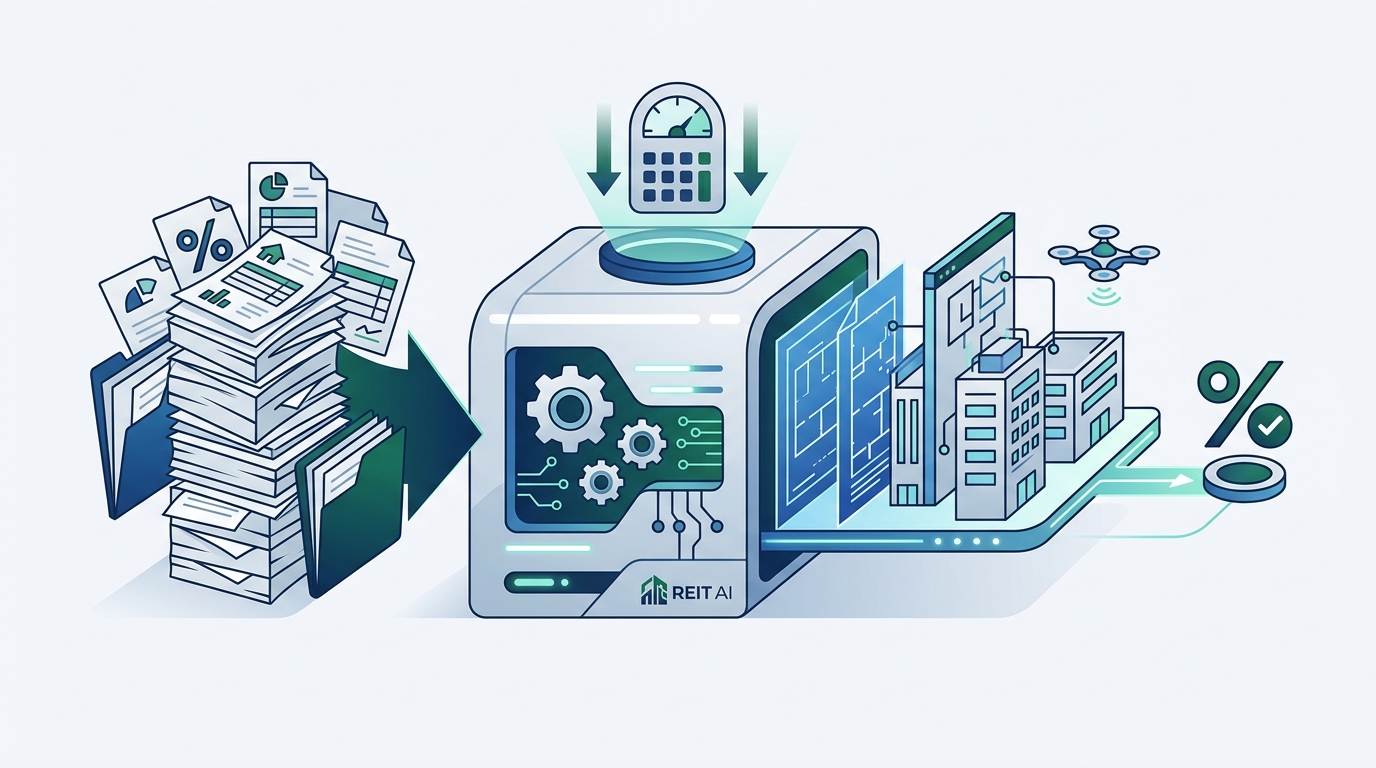
Choosing an AI platform requires looking past marketing buzzwords to the underlying architecture. A true AI operating layer replaces the human management layer entirely, whereas a legacy tool merely adds a dashboard to existing manual processes. The core distinction is whether the software executes the operation or simply reports on it.
Autonomy vs. Assistance
Assistive tools help humans work faster. Autonomous systems handle the work. When evaluating a platform, determine if it can triage a maintenance request, dispatch a vendor, and review the invoice without human intervention. If the system requires a human to click "approve" for every minor task, it is not reducing headcount; it is just adding a step.
Vertical Specialization
Generic property management software often struggles with the specific lease structures of institutional real estate. Look for platforms built specifically for the vertical you operate in, such as residential multifamily or commercial enterprise. Specialized logic ensures that the AI understands the nuances of CAM reconciliations or NNN lease structures.
What to Ask: The Due Diligence Checklist
Before committing to a new operating layer, you must interrogate the vendor's governance model. The questions you ask will determine if the platform aligns with your institutional control frameworks.
Governance and Control
Ask how the system handles approval gates. Can you set spend thresholds that automatically escalate to a human? Does the platform allow you to define the rules for vendor selection? You need a system where the Asset Manager remains in charge of the strategy while the software executes the tactics.
Integration Depth
Inquire about the integration method. Does the platform require you to rip out your existing accounting or banking stack? A robust enterprise solution should deploy inside your current architecture, connecting via APIs to your existing tools rather than forcing a migration to a proprietary ecosystem.
How to Verify: Checking Claims and Credentials
Vendors often cite impressive metrics, but verification is critical. You must ensure that the performance figures are based on real-world deployments rather than theoretical projections.
Audit Trails
Request a demonstration of the audit trail. Every automated action should be timestamped and reviewable. If the system cannot provide a defensible record of why a specific vendor was chosen or why an invoice was approved, it lacks the institutional rigor required for compliance.
Security Posture
Verify the data handling practices. Look for encryption in transit and at rest, as well as least-privilege access controls. Ensure the vendor explicitly states that they do not use your client data to train third-party models. This is a non-negotiable requirement for institutional investors.
How It Works: The Operational Sequence
Understanding the workflow is essential to predicting the impact on your team. The process typically follows a strict sequence of intake, triage, execution, and reporting.
Intake and Triage
The process begins when a tenant submits a request or an invoice arrives. The AI parses the input instantly. For maintenance, it determines liability based on the lease. For invoices, it checks against contract terms and historical pricing.
Execution and Oversight
Once triaged, the system executes the necessary action. It may dispatch a vendor or flag an invoice for review. The Asset Manager receives a real-time alert for any item that exceeds the defined thresholds. This ensures that exceptions are handled immediately rather than at month-end.
What It Costs: Drivers of Price
Traditional property management fees are a percentage of gross rents, typically ranging from 8% to 12%. AI platforms shift this to a fixed subscription model. This change fundamentally alters the cost structure of your portfolio.
Subscription Models
Most AI platforms charge a flat fee per unit for residential portfolios or per square foot for commercial assets. This fee covers the full scope of operations, including leasing, maintenance, and compliance. Because the cost is fixed, it does not increase as your rents grow, providing a predictable operating expense.
Onboarding Fees
Expect a one-time onboarding fee. This covers data migration, platform configuration, and integration with your existing systems. The duration of onboarding is a key cost driver; efficient platforms can complete this in weeks, while legacy migrations can take months.
What Goes Wrong: Common Mistakes
Implementing an AI operating layer is a significant change. Avoiding common pitfalls ensures a smooth transition.
Over-Automation
A common error is allowing the AI to operate without clear guardrails. If you do not define your approval gates and spend thresholds, the system may make decisions that align with efficiency but not with your strategic goals. Always maintain human oversight for high-value actions.
Data Quality Issues
AI is only as good as the data it receives. If your historical data is messy or incomplete, the AI's recommendations will be flawed. Invest time in cleaning your data before onboarding to ensure accurate triage and reporting.
Versus Alternatives: AI vs. Legacy Management
The choice is between a human-heavy management layer and an autonomous software engine. Each has distinct implications for your Net Operating Income (NOI).
| Feature | Traditional Management | AI Operating Layer |
|---|---|---|
| Cost Structure | 8–12% of Gross Rents | Fixed Subscription (1–3% of Rents) |
| Response Time | Business Hours | 24/7 Autonomous |
| Scalability | Linear (Add Staff) | Exponential (Add Units) |
| Visibility | Monthly Reports | Real-Time Dashboard |
The table highlights the structural advantage of AI. While traditional management scales linearly with headcount, AI scales with data. This allows you to manage a larger portfolio without a proportional increase in operating costs.
For a Specific Situation: REITs and Family Offices
The benefits of AI vary by investor type. For REITs, the focus is on portfolio-wide consistency. For family offices, the focus is on control without headcount.
REITs
REITs benefit from standardized governance. You can set fund-level rules that are enforced identically across every asset. This ensures that every property in the portfolio is operated to the same standard, reducing variance and improving audit readiness.
Family Offices
Family offices often have lean teams. An AI platform provides the operational capacity of a large management firm without the payroll. Principals can maintain direct control over their assets while the software handles the day-to-day execution.
Rules and Protections: Compliance and Security
Institutional real estate is heavily regulated. Your platform must support compliance workflows without guaranteeing legal outcomes.
Audit-Ready Compliance
The platform should produce regulator-ready compliance as a byproduct of normal operations. This means that every action is logged and can be reviewed by internal or external auditors. The system should map controls to relevant standards, such as FCA or SEC requirements, where applicable.
Data Privacy
Ensure the vendor has a robust Data Processing Addendum (DPA). This document governs how personal data is handled and ensures that the vendor acts only on your behalf. It is a critical protection for your organization.
Local Specifics: Jurisdictional Awareness
Real estate laws vary by jurisdiction. A platform must be jurisdiction-aware to operate effectively across different regions.
Cross-Border Operations
If you operate in multiple countries, the platform must handle different regulatory environments. It should allow you to define local rules while rolling up reporting to a single standard. This ensures that you have a consistent view of your global portfolio.
Timing: When to Act
The timing of your implementation can impact the outcome. Acting early allows you to capture the benefits of AI before your competitors do.
Market Conditions
In a tight market, efficiency is key. Reducing operating costs can improve your NOI and make your assets more attractive to investors. Implementing an AI platform during a period of market stress can provide a significant competitive advantage.
Results Over Time: Long-Term Outcomes
The benefits of AI compound over time. As the system learns from your data, its recommendations become more accurate. This leads to continuous improvements in efficiency and cost savings.
Continuous Improvement
Over the first year, you should see a reduction in operating costs. The system will identify inefficiencies that were previously hidden. Over time, the platform becomes an integral part of your operational infrastructure, providing a durable advantage.
Key Takeaways
- AI platforms charge a fixed subscription fee, typically 1–3% of rents, compared to the 8–12% charged by traditional managers.
- True autonomy requires the AI to execute tasks, not just report on them.
- Verify the vendor's audit trail and security posture before committing.
- Onboarding is a one-time cost that covers data migration and integration.
- Define clear approval gates to maintain human oversight.
- REITs benefit from standardized governance, while family offices benefit from lean operations.
- The platform must be jurisdiction-aware to support cross-border portfolios.
- Long-term results depend on data quality and continuous improvement.
Frequently Asked Questions
How much do AI property management platforms cost?
Most platforms charge a flat fee per unit or per square foot. This typically amounts to 1–3% of gross rents, which is significantly lower than the 8–12% charged by traditional property management companies.
Does the AI replace the property manager?
The AI replaces the operational tasks of the property manager, such as triage and dispatch. However, the Asset Manager remains in charge of strategy, rules, and approvals. The human role shifts from execution to governance.
How long does onboarding take?
Onboarding typically takes two weeks or less for efficient platforms. This includes data migration and integration with your existing systems. The timeline can vary depending on the complexity of your current stack.
Is the data secure?
Reputable platforms use encryption in transit and at rest, along with least-privilege access controls. They should also provide a complete audit trail for every action. Always review the vendor's security brief and DPA.
Can I integrate with my existing accounting software?
Yes, enterprise-grade platforms deploy inside your existing architecture. They connect via APIs to your accounting, banking, and CRM systems, so you do not need to rip and replace your current stack.
What happens if the AI makes a mistake?
The system is designed to flag exceptions for human review. If an action exceeds a defined threshold, it is escalated to the Asset Manager. This ensures that high-risk decisions are always made by a human.
Conclusion
Transitioning to an AI operating layer is a strategic move that can significantly reduce operating costs and improve visibility. By choosing a platform that offers true autonomy, robust security, and seamless integration, you can modernize your portfolio without compromising control. Request a demo to see how REIT AI can transform your operations.