

Automated Invoice Review and Overcharge Detection for Real Estate Portfolios
Automated invoice review software compares vendor invoices against contract terms, historical pricing, and scope of work to flag overcharges before payment is released. This guide covers how AP automation, spend management tools, and overcharge detection work together to protect Net Operating Income (NOI) in institutional real estate. We examine the operational mechanics, the role of AI in continuous reconciliation, and how platforms like REIT AI integrate these capabilities into a unified operating layer.
AP Automation Software
Accounts Payable (AP) automation is the process of digitizing and streamlining the workflow from invoice receipt to payment execution. In traditional real estate operations, this process is often manual, relying on spreadsheets and email chains that introduce latency and human error. Modern AP automation software ingests invoices via OCR or API, extracts key data points, and routes them for approval based on predefined rules.
Continuous Reconciliation vs. Batch Processing
Traditional property management often relies on monthly batch processing, where invoices are reviewed in bulk at the end of the month. This approach delays the detection of errors. In contrast, automated systems perform continuous reconciliation against the accounting system. This means that as soon as an invoice is received, it is checked against the general ledger and contract terms. Exceptions surface in hours rather than weeks, allowing operators to correct issues before funds are disbursed.
Integration with Existing Stacks
Effective AP automation does not require ripping out existing infrastructure. Platforms like Mondo OS deploy inside your current architecture, connecting to your accounting, banking, and CRM systems. This integration ensures that data flows seamlessly without manual re-entry, reducing the administrative burden on lean teams while maintaining full visibility into cash flow.
Spend Management Tools
Spend management is the strategic oversight of all operational expenditures to ensure they align with budgetary goals and contractual obligations. For institutional investors, spend management is not just about cutting costs; it is about governance. It involves setting spend thresholds, defining approval hierarchies, and ensuring that every dollar spent is authorized and justified.
Policy-Driven Dispatch and Approval
Advanced spend management tools enforce policy at the point of action. When a maintenance request is triaged, the system determines the cost band and selects approved vendors within defined spend thresholds. If a cost exceeds the threshold, the system escalates the request for human approval. This mechanism ensures that the Asset Manager retains control over significant expenditures while automating routine, low-risk transactions.
Vendor Oversight and Compliance
Spend management also encompasses vendor oversight. It tracks vendor performance, compliance with service level agreements, and adherence to contract terms. By centralizing this data, operators can identify patterns of non-compliance or inefficiency across their portfolio. This holistic view supports better negotiation leverage and long-term vendor relationships.
Overcharge Detection
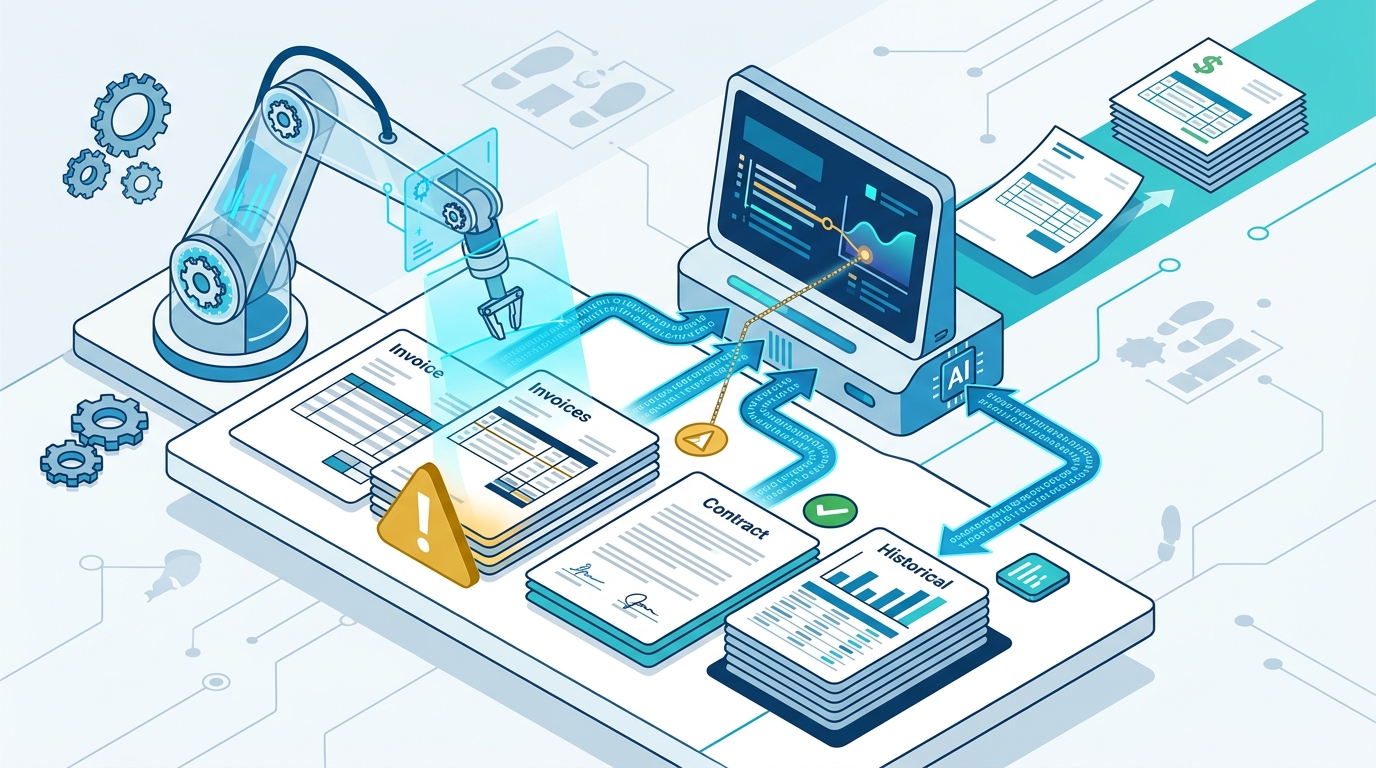
Overcharge detection is the specific capability to identify invoices that exceed contractual rates, historical averages, or logical scope expectations. This is the core value proposition of AI-driven financial triage. The system analyzes every invoice against a baseline of expected costs, flagging anomalies that might be missed by human reviewers.
How AI Flags Anomalies
AI models analyze multiple data points simultaneously. They compare the current invoice against the contract rate, the historical pricing for that specific vendor and service type, and the scope of work described in the maintenance request. If the invoice price is significantly higher than the baseline, or if the scope of work does not match the billed amount, the system flags it as an anomaly. This detection happens at intake, before the invoice enters the payment queue.
Real-World Impact on NOI
By catching overcharges before payment, operators protect their Net Operating Income. In a case study involving a $450M REIT portfolio, the implementation of automated financial triage led to a 34% reduction in operating expenses within the first 90 days. This was achieved by eliminating management fee leakage and catching invoice exceptions early. While results vary by portfolio, the principle remains consistent: early detection prevents financial leakage.
Comparison of Invoice Review Approaches
| Feature | Manual Review | Rule-Based Automation | AI-Driven Financial Triage |
|---|---|---|---|
| Detection Speed | Days to Weeks | Hours | Minutes |
| Anomaly Identification | Subjective, error-prone | Fixed rules only | Contextual, adaptive |
| Scalability | Low (requires headcount) | Medium | High (autonomous) |
| Integration Depth | Manual data entry | Basic API connections | Deep stack integration |
Key Takeaways
- Continuous Reconciliation: Moving from monthly batch processing to real-time reconciliation allows operators to catch errors before payment.
- Policy Enforcement: Spend management tools enforce approval thresholds, ensuring that only authorized expenditures proceed automatically.
- Contextual AI: AI-driven overcharge detection uses contract terms, historical data, and scope of work to flag anomalies with high accuracy.
- NOI Protection: Early detection of overcharges directly protects Net Operating Income by preventing unnecessary cash outflows.
- Integration is Key: The most effective solutions integrate deeply with existing accounting and banking systems, avoiding rip-and-replace scenarios.
- Human Oversight: Automation should augment, not replace, human judgment. Asset Managers retain control over rules, thresholds, and final approvals.
- Scalability: AI platforms can manage thousands of units and assets without a proportional increase in headcount, offering institutional coverage with lean teams.
- Auditability: Every automated action and approval is timestamped and logged, providing a defensible trail for internal and external audits.
Frequently Asked Questions
What is the difference between AP automation and overcharge detection?
AP automation streamlines the workflow of receiving, processing, and paying invoices. Overcharge detection is a specific analytical capability within that workflow that identifies invoices that exceed expected costs. AP automation is the vehicle; overcharge detection is the safety mechanism.
How does AI determine if an invoice is an overcharge?
AI compares the invoice amount against the contractual rate, historical pricing for that vendor and service, and the scope of work described in the request. If the variance exceeds a defined threshold, the system flags it for review.
Can these systems integrate with existing accounting software?
Yes. Platforms like Mondo are designed to deploy inside your existing architecture. They connect to your accounting, banking, and CRM systems via APIs, ensuring data consistency without requiring you to switch providers.
What is the role of the Asset Manager in an automated system?
The Asset Manager defines the rules, sets spend thresholds, and approves exceptions. The system executes routine tasks autonomously, but the Asset Manager retains final authority over all significant decisions and policy changes.
How quickly can these systems be deployed?
Deployment timelines vary, but platforms like REIT AI guarantee onboarding in two weeks or less. This includes data migration, system configuration, and baseline calibration.
Do these systems guarantee cost savings?
No. While these systems are designed to identify and prevent overcharges, results vary by portfolio, vendor mix, and deployment. Performance figures are illustrative and not guaranteed outcomes.
Is REIT AI a licensed financial advisor?
No. REIT AI provides operations software and automation. It is not a licensed financial, investment, tax, or legal advisor. The software supports decision-making but does not provide professional advice.
Conclusion
Automated invoice review and overcharge detection are no longer optional for institutional real estate operators. They are essential tools for protecting NOI and ensuring operational efficiency. By leveraging AP automation, spend management, and AI-driven financial triage, you can eliminate the structural inefficiencies of traditional management layers. REIT AI provides the infrastructure to run these operations on autopilot, with full visibility and control. To see how these capabilities can be applied to your portfolio, request a demo and explore the live environment.