

Automating CAM and NNN Reconciliation and Lease Abstraction in 2026
Modern commercial real estate software automates CAM and NNN reconciliation by continuously matching vendor invoices against lease terms and historical baselines. It also handles lease abstraction by extracting critical variables from unstructured documents into structured data. This guide covers how these systems work, the specific tools available, and how platforms like REIT AI integrate these capabilities into a unified operating layer for institutional portfolios.
CAM Reconciliation Software
Common Area Maintenance (CAM) reconciliation is the process of calculating and recovering shared operating expenses from tenants based on lease agreements. Traditional methods rely on manual spreadsheet work, which is prone to error and delays. Modern software automates this by ingesting General Ledger (GL) data and matching it against lease-specific recovery rules.
Continuous Reconciliation vs. Month-End Batching
Legacy systems often process CAM data in monthly or quarterly batches. This creates a lag where variances are only discovered after the fact. Advanced platforms perform continuous reconciliation, checking every invoice against contract terms and historical pricing in real time. This approach surfaces exceptions in hours rather than weeks, allowing property managers to address discrepancies before they impact Net Operating Income (NOI).
GLA-Based Expense Allocation
Accurate CAM recovery depends on precise Gross Leasable Area (GLA) calculations. Software must automatically allocate expenses based on the specific GLA ratios defined in each lease. By automating this calculation, the system compresses recovery cycles from weeks of manual spreadsheet work to minutes of reviewed output. This ensures that tenants are billed accurately and that the property owner recovers all eligible expenses without manual intervention.
NNN Reconciliation Automation
Triple Net (NNN) lease reconciliation is the process of verifying that tenants are paying their proportionate share of property taxes, insurance, and operating expenses. In NNN structures, the landlord passes these costs directly to the tenant. Automation in this area focuses on validating that the pass-through amounts align with the lease terms and actual incurred costs.
Automated Variance Detection
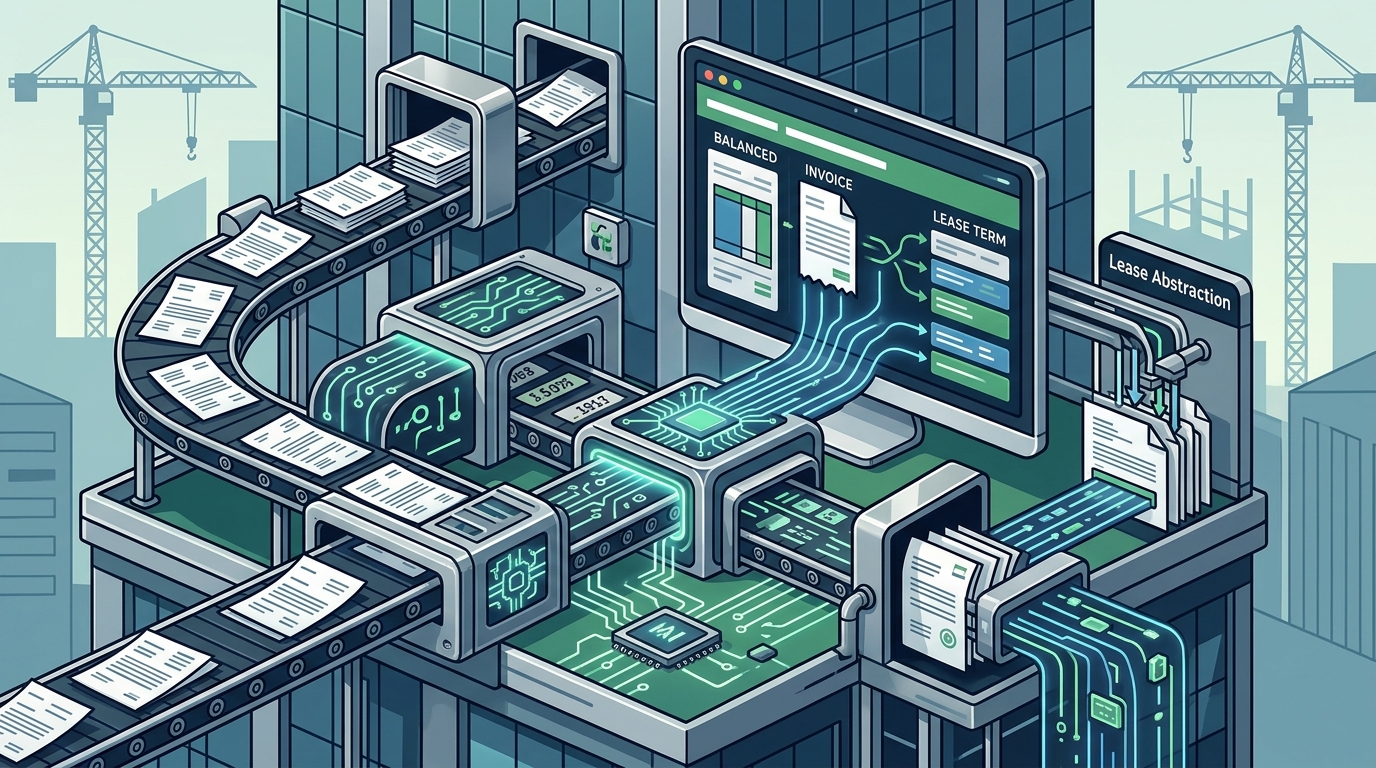
Manual review of NNN statements is time-consuming and often misses subtle errors. Automated systems compare budgeted amounts against actuals, flagging any variance that exceeds a defined threshold. This proactive detection prevents overbilling or underbilling, which can lead to tenant disputes or lost revenue. The system provides a live view of budget-to-actual variance, with drivers identified per asset.
Integration with Accounting Systems
Effective NNN automation requires seamless integration with existing accounting and ERP systems. The software reconciles data directly against the accounting system rather than relying on manual exports. This ensures data integrity and reduces the risk of transcription errors. By maintaining a single source of truth, the platform provides a defensible audit trail for every reconciliation action.
Lease Abstraction Tools
Lease abstraction is the process of extracting key data points from lease documents into a structured format. This includes variables such as rent, term, renewal options, and maintenance responsibilities. Manual abstraction is slow and inconsistent, often leading to data gaps in property management systems.
Automated Document Extraction
AI-driven tools use natural language processing to parse unstructured lease documents. They automatically identify and extract critical terms, rent rolls, vendor contracts, and lease variables. This eliminates the need for manual data entry, which is a significant source of human error. The extracted data is then mapped to the property management system, ensuring that operational decisions are based on accurate, up-to-date information.
Liability Resolution at Intake
One of the most valuable applications of lease abstraction is determining maintenance liability. The system parses complex lease contracts to identify responsibility splits and exposure before a vendor is ever dispatched. This ensures that maintenance requests are routed to the correct party and that costs are allocated appropriately. By resolving liability at intake, the software prevents billing disputes and ensures efficient workflow management.
Commercial Property Platforms
Commercial property platforms are comprehensive software solutions that manage the full lifecycle of real estate assets. These platforms integrate leasing, maintenance, financial reconciliation, and reporting into a single interface. The choice of platform depends on the specific needs of the portfolio, such as asset class, scale, and governance requirements.
Integrated Operating Layers
Leading platforms like REIT AI provide an integrated operating layer that sits on top of existing infrastructure. This approach avoids the need for rip-and-replace migrations, which are costly and disruptive. Instead, the platform becomes the operating layer, connecting to accounting, banking, CRM, and document systems via custom API integrations. This allows institutions to maintain their existing stack while gaining the benefits of AI-driven automation.
Governance and Auditability
Institutional investors require robust governance and auditability. Modern platforms provide scoped access, encryption in transit and at rest, and a complete audit trail on every automated action. This ensures that the Asset Manager remains in full control, setting rules, thresholds, and approval gates. The system executes these rules autonomously, while the human operator governs the overall strategy. This balance of automation and control is essential for institutional-grade operations.
| Feature | Traditional Spreadsheets | Legacy Property Management Software | AI-Driven Operating Layer (e.g., REIT AI) |
|---|---|---|---|
| CAM/NNN Reconciliation | Manual, monthly batches | Semi-automated, quarterly cycles | Continuous, real-time variance detection |
| Lease Abstraction | Manual data entry | Basic template-based entry | AI-driven automated extraction |
| Integration | Manual exports/imports | Limited API connectivity | Custom API integrations into existing stack |
| Audit Trail | None or basic version control | System logs | Complete, timestamped, regulator-ready trail |
| Governance | Manual oversight | Role-based access | Asset Manager-defined rules and approval gates |
Key Takeaways
- CAM and NNN reconciliation software automates the matching of vendor invoices against lease terms and historical baselines.
- Continuous reconciliation surfaces financial exceptions in hours, rather than waiting for month-end or quarter-end cycles.
- Lease abstraction tools use AI to extract critical variables from unstructured documents, eliminating manual data entry errors.
- Automated liability resolution at intake ensures that maintenance requests are routed correctly and costs are allocated per lease terms.
- Integrated operating layers connect to existing accounting and ERP systems, avoiding costly rip-and-replace migrations.
- Robust governance features, including scoped access and complete audit trails, are essential for institutional compliance.
- Platforms like REIT AI allow Asset Managers to retain full control over rules and approvals while benefiting from autonomous execution.
Frequently Asked Questions
What is CAM reconciliation in commercial real estate?
CAM reconciliation is the process of calculating and recovering shared operating expenses from tenants based on lease agreements. It involves matching actual expenses against budgeted amounts and lease-specific recovery rules.
How does NNN lease automation work?
NNN lease automation verifies that tenants are paying their proportionate share of property taxes, insurance, and operating expenses. It compares budgeted amounts against actuals and flags any variances that exceed defined thresholds.
What is lease abstraction?
Lease abstraction is the process of extracting key data points from lease documents into a structured format. This includes variables such as rent, term, renewal options, and maintenance responsibilities.
Can AI replace manual lease abstraction?
Yes, AI-driven tools can automate lease abstraction by using natural language processing to parse unstructured documents. This eliminates the need for manual data entry and reduces the risk of human error.
How does an AI operating layer integrate with existing systems?
An AI operating layer integrates with existing systems via custom API connections. It connects to accounting, banking, CRM, and document systems, becoming the operating layer on top of the existing stack without requiring rip-and-replace migrations.
What governance features are important in commercial property software?
Important governance features include scoped access, encryption in transit and at rest, and a complete audit trail on every automated action. These features ensure that the Asset Manager remains in full control and that the system meets institutional compliance requirements.
Conclusion
Automating CAM and NNN reconciliation and lease abstraction is essential for institutional real estate portfolios seeking to improve efficiency and accuracy. By leveraging AI-driven platforms, property managers can eliminate manual errors, surface financial exceptions in real time, and maintain full governance over their operations. REIT AI provides a robust solution for these needs, offering an integrated operating layer that connects to existing systems and provides a complete audit trail. To see how these capabilities can benefit your portfolio, request a demo today.