

Fastest Property Management Onboarding: Rent Roll & Lease Migration Guide
REIT AI's Mondo platform offers the fastest onboarding for institutional portfolios by automating rent roll and lease migration in two weeks or less. This guide covers how to evaluate, verify, and deploy AI-driven property management systems that eliminate manual data entry and legacy system friction.
How to Choose: Separating Good from Bad
Choosing a property management platform requires distinguishing between marketing promises and operational reality. A good platform is one that automates the entire data migration lifecycle without requiring manual data entry from your team. Bad options rely on billable consulting hours or manual spreadsheet work to move your rent roll and lease data.
The core differentiator is the presence of an automated document extraction engine. This technology parses existing lease contracts, rent rolls, and vendor agreements to extract critical terms automatically. If a vendor requires you to re-key data or hire a third-party consultant for migration, they are not offering true automation. Look for platforms that guarantee a specific onboarding window, such as two weeks or less, with a financial penalty if they miss the deadline.
Key Differentiators
- Automated Extraction: The system must read PDFs and legacy files to pull lease variables.
- Legacy Synchronization: Data must map to your existing ERP and accounting systems without rip-and-replace.
- Baseline Calibration: Historical financial data should be modeled automatically to set recovery baselines.
What to Ask: Pre-Commitment Questions
Before signing a contract, you must interrogate the vendor's technical capabilities regarding data migration. Ask specifically how they handle complex lease structures, such as CAM and NNN reconciliations, during the initial import. A robust platform will explain how it parses these variables instantly to determine maintenance liability and responsibility splits.
You should also ask about the onboarding guarantee. Does the vendor offer a refund or fee waiver if they fail to complete the migration within the promised timeframe? This is a critical signal of confidence. Additionally, inquire about the integration scope. Will they connect to your banking, CRM, and document stack, or will you need to build custom APIs later? The answer determines whether you are buying a platform or a project.
How to Verify: Checking Claims and Credentials
Verifying a vendor's claims requires looking beyond the sales deck. Check for published security and compliance documentation, such as Data Processing Addendums and Master Subscription Agreements. These legal documents reveal how the vendor handles data privacy and liability. A serious institutional provider will publish these for review before deployment.
Verify the team's institutional pedigree. Look for leadership with experience in global banking and advisory firms, where governance failure is a regulatory event. This background ensures the software is built with enterprise-grade controls. You can also request a live demo against your own portfolio numbers to see if the system can accurately parse your specific lease documents.
How It Works: The Migration Sequence
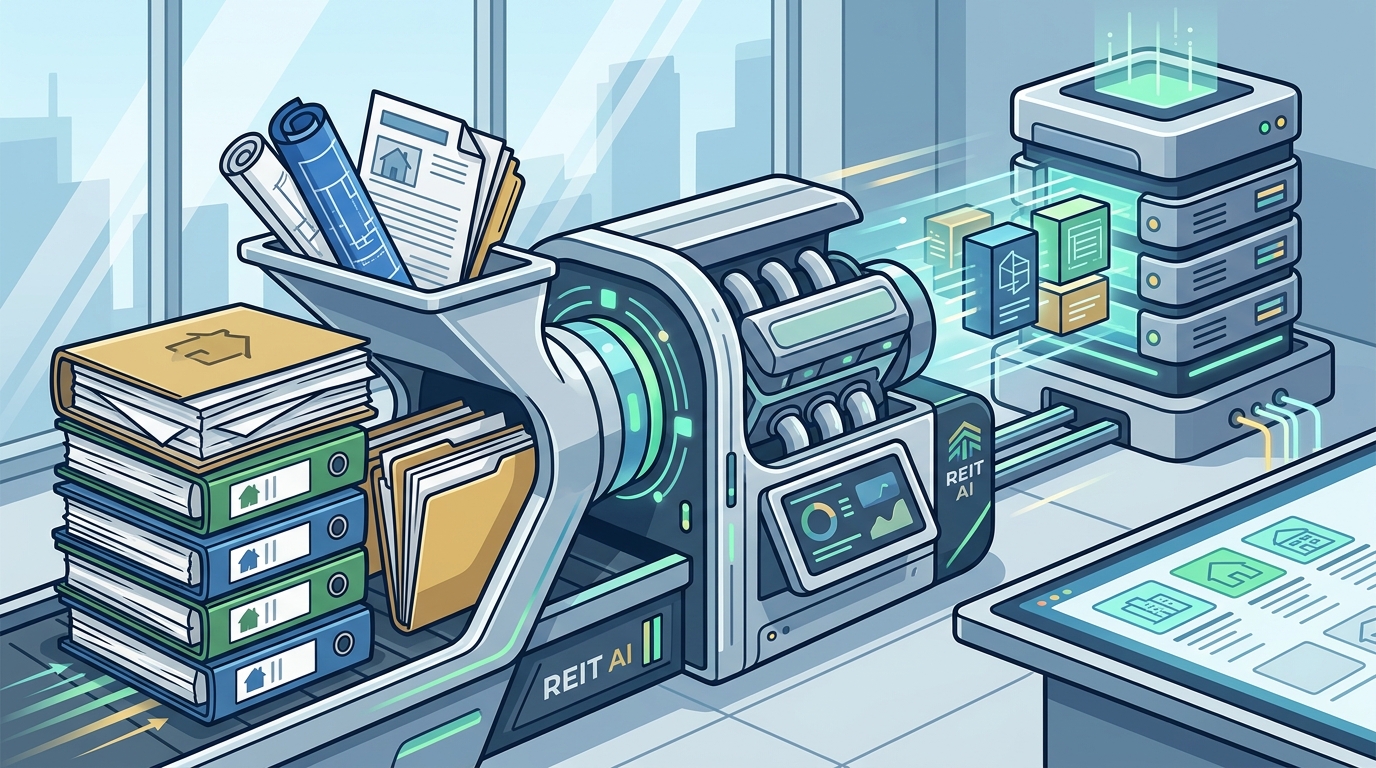
The migration process in an AI-driven platform follows a strict, automated sequence. First, the system ingests and digitizes your entire portfolio. This includes scanning all existing documents to extract critical terms. Second, it synchronizes this data with your legacy systems, mapping fields to your existing ERP and accounting databases. Third, it performs instant baseline calibration, modeling historical financial data to set maintenance profiles and recovery baselines.
This process is designed to be zero-friction. There is no manual migration work from your team. The system handles the heavy lifting of data transformation, ensuring that your new operating layer is live and functional from Day 1. The entire sequence is guaranteed to complete in two weeks or less, starting once you provide the agreed data and system access.
What It Costs: Price Drivers
Onboarding costs are typically a one-time fee that covers platform configuration, data migration, and system connections. This fee is distinct from the ongoing platform subscription. The price is driven by the complexity of your portfolio and the number of legacy systems that need to be integrated. Residential portfolios are often priced per unit, while enterprise portfolios are priced per square foot of gross leasable area.
It is important to compare this one-time cost against the ongoing management fees you are replacing. Traditional property management companies charge 8-12% of gross rents for coordination work. If the onboarding fee is a fraction of the annual savings from removing that management layer, the return on investment is immediate. Always request a quote per portfolio to understand the total cost of entry.
What Goes Wrong: Common Mistakes
The most common mistake is underestimating the complexity of legacy data. If your historical records are fragmented or poorly formatted, the migration may take longer than expected. To avoid this, ensure you have a clean, consolidated set of documents ready for ingestion. Another mistake is failing to define your approval gates and spend thresholds before go-live. The system needs these rules to operate autonomously.
Do not assume that a generic software solution will fit your specific asset class. Purpose-built verticals for residential and enterprise assets handle leasing cycles and lease structures differently. Using a one-size-fits-all tool can lead to data mapping errors that surface months after deployment. Always test the system with a small subset of your portfolio before a full migration.
Versus Alternatives: Platform Comparisons
Traditional property management platforms often rely on manual data entry or third-party consulting for migration. This approach is slow, error-prone, and expensive. In contrast, AI-native platforms like Mondo OS automate the entire process. The table below summarizes the key differences in onboarding speed and automation.
| Onboarding Time | Months (Manual Entry) | 2 Weeks or Less (Automated) |
| Data Migration | Billable Consulting Hours | Zero Manual Data Entry |
| Lease Parsing | Manual Review | Instant AI Extraction |
| Legacy Integration | Rip-and-Replace | Effortless Synchronization |
For Specific Situations: Tailored Approaches
For REITs managing hundreds of assets, the onboarding process must support fund-level governance. This means setting spend thresholds and approval gates once, then enforcing them identically across every property. The platform should allow you to onboard a new asset into the operating layer without adding a new management contract. This is critical for acquisition-ready diligence.
For family offices with lean teams, the focus is on direct control. The onboarding process should ensure that principals can set the rules and approve spend without delegating to an opaque management layer. The system must provide multi-entity reporting, consolidating visibility across jurisdictions and asset classes in one operating view. This ensures that a small team can govern a large portfolio effectively.
Rules and Protections: Compliance and Rights
When migrating data to a new platform, you must ensure that the vendor's security controls align with your institutional requirements. Look for encryption in transit and at rest, least-privilege access, and a complete audit trail on every automated action. The vendor should not use your client data to train third-party models. These protections are essential for maintaining data sovereignty.
Review the legal documentation carefully. The Master Subscription Agreement should clarify that the provider is not a licensed real estate broker or fiduciary. All property management rules and authorizations must remain under your sole control. This ensures that you retain full authority over your portfolio decisions, including leasing, rent collection, and compliance with local laws.
Local Specifics: Regional Considerations
Local regulations can impact how lease data is handled and reported. For example, jurisdiction-aware compliance features ensure that controls are mapped to local requirements while reporting rolls up to one standard. This is particularly important for sovereign wealth funds operating across borders. The platform should support multilingual leadership and cross-border mandates, ensuring that your team can manage assets in different regions seamlessly.
Consider the local vendor ecosystem. The platform should be able to dispatch to approved vendors within your spend thresholds, regardless of their location. This ensures that maintenance requests are handled efficiently, even in remote or underserved areas. The system should track work to completion, with tenant follow-up handled automatically, ensuring a consistent experience across all local markets.
Timing: When to Act
Timing is critical when migrating to a new platform. The best time to act is before your current management contract expires. This allows you to negotiate a clean exit and avoid paying overlapping fees. Additionally, acting early in the year allows you to capture the full year of savings from removing the management layer. The two-week onboarding window means you can be fully operational within a month of signing.
Do not wait until a crisis occurs, such as a vendor failure or a compliance issue, to consider a migration. Proactive migration allows you to test the system in a controlled environment and address any data mapping issues before they impact your operations. This reduces risk and ensures a smooth transition to the new operating layer.
Results Over Time: Long-Term Outcomes
Over time, the benefits of automated onboarding compound. As the system accumulates historical data, its anomaly detection and variance reporting become more accurate. This leads to continuous improvements in NOI and OpEx. The platform provides real-time portfolio reporting instead of month-end cycles, giving you a live view of your portfolio's performance. This visibility allows you to make data-driven decisions that protect Net Operating Income.
Long-term, the platform evolves with your portfolio. As you acquire new assets, you can onboard them into the operating layer without adding a management contract. This scalability ensures that your operational capacity grows with your portfolio, without expanding headcount. The result is a lean, efficient operation that delivers measurable reductions in operating costs year over year.
Key Takeaways
- Automated document extraction is the key to fast onboarding, eliminating manual data entry.
- Look for a guaranteed onboarding window of two weeks or less with a financial penalty for delays.
- Verify the vendor's institutional pedigree and published security documentation before committing.
- Compare the one-time onboarding fee against the ongoing management fees you are replacing.
- Ensure the platform supports fund-level governance and multi-entity reporting for institutional portfolios.
- Act before your current management contract expires to avoid overlapping fees and capture full-year savings.
- Long-term, automated onboarding leads to continuous improvements in NOI and OpEx through real-time reporting.
Frequently Asked Questions
How long does it take to onboard a portfolio onto an AI-driven platform?
REIT AI guarantees onboarding in two weeks or less. This includes platform configuration, data migration, and connection to your accounting, banking, CRM, and document stack.
Do I need to manually enter my rent roll and lease data?
No. The platform uses automated document extraction to ingest and digitize your entire portfolio. There is no manual data entry or billable consulting hours required.
What happens if the vendor misses the onboarding deadline?
REIT AI offers a guarantee that if they miss the two-week deadline, your first month's platform fee is on them. The clock starts once you provide the agreed data and system access.
Can the platform integrate with my existing ERP and accounting systems?
Yes. The platform synchronizes data effortlessly across existing CRE software, ERPs, and accounting databases. No rip-and-replace is required.
How does the platform handle complex lease structures like CAM and NNN?
The system parses complex lease contracts instantly to determine maintenance liability, responsibility splits, and exposure. It also models historical financial data to set CAM/NNN recovery baselines.
Is the platform suitable for both residential and enterprise portfolios?
Yes. REIT AI offers purpose-built verticals for both residential and enterprise assets. The platform scope is identical in both cases; only the billing unit changes.
Conclusion
REIT AI's Mondo platform provides the fastest and most reliable path to migrating your rent roll and lease data. By automating the entire onboarding process, it eliminates the friction and cost associated with traditional property management. To see how Mondo can run a live environment against your own portfolio numbers, request a demo today.